
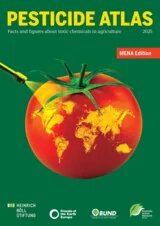
Pesticide Atlas-MENA Edition-2025

Pesticides in the Middle East and North Africa are widely used to protect crops and ensure yields in a region already facing acute water scarcity, fragile soils, and the worsening impacts of climate change. Behind this dependency lies a deeper story about health effect, weak regulation of agrochemicals, and the struggle for food sovereignty. Yet, change is taking root. From Palestine to Morocco, farmers, researchers, and grassroots movements are proving that agriculture can indeed thrive without toxic pesticides, by restoring soil health, regenerating biodiversity, and rebuilding healthy food systems.
The Pesticide Atlas raises awareness, provides comprehensive information and fosters nuanced debate around agrochemicals used for pest control. It sheds light on different aspects from scientific research, including the impact of pesticides on soils, waters, biodiversity and health, and highlights alternative models with a more stringent implementation of integrated pest management where synthetic substances are only a last resort option. Building on the 2022 global Pesticide Atlas produced by Heinrich Böll Stiftung, Friends of the Earth Europe, BUND, and PAN Europe, this MENA Edition was developed by Heinrich Böll Stiftung - Palestine and Jordan, in cooperation with hbs offices in Beirut, Rabat, and Tunis. It presents regional data, case studies, and testimonies to inform the regional public debate.
Deutsche Version | US edition | En français | En español | In italiano | Wersja polska | Nigeria version | Kenya version | Türkçe versiyonu | Edição brasileira | Edition sénégalaise | Edición mexicana | Korean Edition (English version)